Planning your first golf tournament can feel like a lot.
There are players to register, teams to organise, sponsors to contact, prizes to sort, and a whole list of little details that somehow seem to multiply as the event gets closer.
And while you don’t need to be a professional event planner to pull off a great golf tournament, there are a few common mistakes that can make the planning process much more stressful than it needs to be.
The good thing? Most of them are easy to avoid when you know what to look out for.
.
.
Whether you’re planning a charity golf tournament, company golf day, club event or fundraiser for the first time, this list will help you spot the potential trouble spots early — and head into your 2027 golf tournament planning with a much clearer plan.
Here are 11 golf tournament mistakes first-time organizers make and what to do instead.
.
.
What’s Inside
In this guide, we’ll cover:
- 11 common golf tournament mistakes first-time organizers make
- The planning details that are easy to overlook
- How to avoid last-minute stress and unnecessary costs
- Tips for keeping registration, pairings, sponsors and prizes organised
- What to plan well before event day
- Simple ways to make your 2027 golf tournament run more smoothly
Grab a coffee, make a note of the areas you still need to tackle, and let’s get your tournament planning off to a great start.
.
.
1. Starting Without a Clear Plan
It’s tempting to jump straight into the fun stuff — choosing a theme, contacting sponsors or thinking about prizes.
But before you start ticking off individual tasks, you need a clear picture of what your golf tournament is actually going to look like.
Without a basic plan, it’s surprisingly easy for important details to get missed. You might book the venue before knowing your expected player numbers, forget to allow enough time for registration, or realise too late that your budget doesn’t stretch as far as you thought.
What to plan first
Before you start contacting suppliers or promoting your event, get the basics down on paper:
- Purpose: Is it a charity fundraiser, company event, club tournament or social golf day?
- Date and venue: Check availability and make sure the course suits your expected group size.
- Player numbers: Set a realistic target for registrations.
- Budget: List your expected income and expenses before committing to costs.
- Format: Decide on your tournament format, starting method and any special games or contests.
- Sponsors: Think about what you need sponsors to contribute and what you can offer in return.
- Timeline: Work backwards from event day and set deadlines for the major planning tasks.
You don’t need a complicated event-management system. Even a simple master checklist and planning timeline can make a huge difference.
The goal isn’t to plan every tiny detail on day one. It’s to know where you’re going before you start making decisions.
A simple tip for your 2027 tournament
Start with a one-page tournament overview. Write down your event purpose, date, venue, player target, tournament format, estimated budget and key deadlines.
Once those decisions are clear, the rest of your planning becomes much easier to organise.
.
.
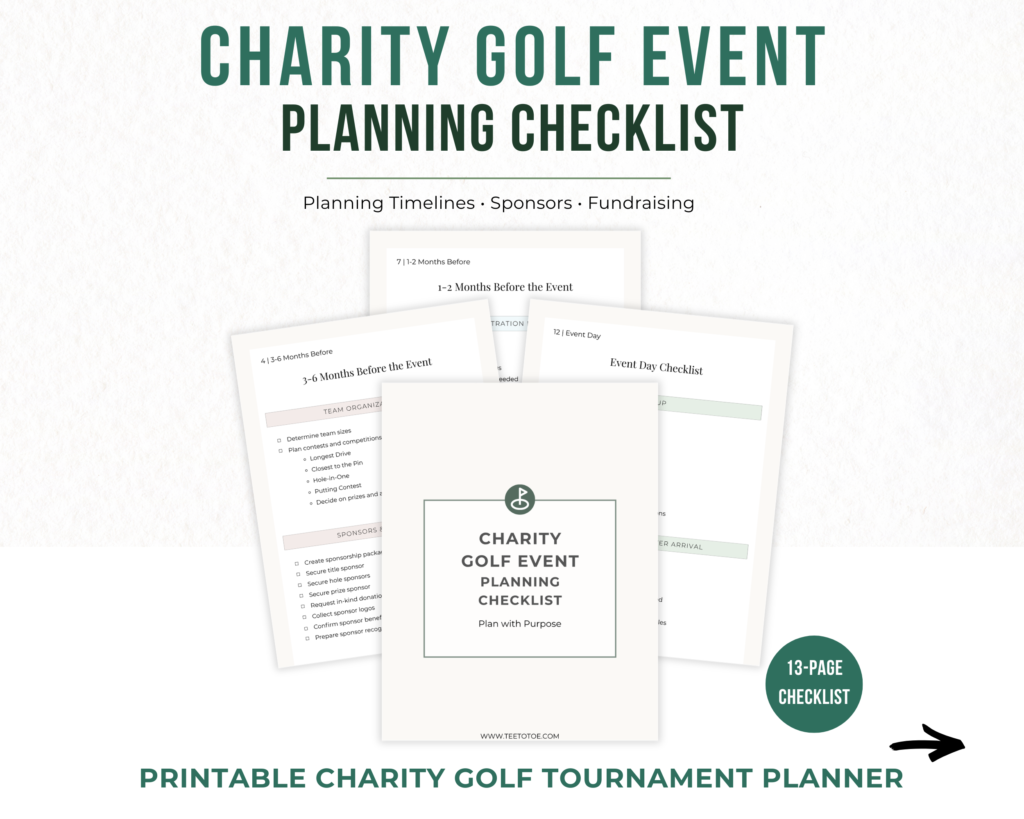
⛳ Keep your tournament planning on track with a simple checklist and timeline
covering the key tasks from planning to event day.
.
.
.
2. Underestimating the Budget
A golf tournament can look surprisingly affordable when you start with the big-ticket items.
Then the smaller costs start adding up.
Signs, printing, player gifts, prizes, food and drinks, raffle supplies, sponsor materials, decorations, payment fees and those last-minute extras can all take a bite out of your budget.
One of the most common mistakes first-time organizers make is creating a budget based on the costs they expect — rather than allowing some room for the costs they haven’t thought about yet.
Don’t forget the smaller expenses
When putting together your tournament budget, think beyond the green fee and clubhouse costs.
You may also need to budget for:
- Player registration materials
- Scorecards and signage
- Prizes and awards
- Sponsor signs and recognition
- Welcome bags or player gifts
- Food, drinks and refreshments
- Raffle or auction supplies
- Printing and stationery
- Decorations or event styling
- Photographer or entertainment
- Payment or ticketing fees
- Unexpected last-minute expenses
If you’re running a charity tournament, it’s also helpful to keep event expenses separate from fundraising income. That makes it much easier to see how much you’re actually raising.
Give yourself a little breathing room
Rather than allocating every dollar of your expected income, build a small contingency into your budget.
Things change. A supplier may increase a price, you may need extra signage, or suddenly realise you need 20 more welcome bags than originally planned.
A little breathing room can prevent a small surprise from becoming a big headache.
.
💡 Quick Tip: Keep one master budget that you update throughout the planning process. Don’t rely on a collection of notes, emails and receipts to work out where your money went after the event.
The clearer your budget is from the beginning, the easier it becomes to make decisions — and keep your tournament financially on track.
.
.
3. Leaving Registration Until the Last Minute
Your tournament can’t run smoothly if you don’t know who is actually playing.
It sounds obvious, but registration is one of those jobs that can easily get pushed down the to-do list while you’re busy organising sponsors, prizes and the venue.
The problem is that player numbers affect almost everything else.
You need to know how many players you have before you can finalise teams, order welcome bags, plan meals, prepare scorecards and work out how many prizes or contest signs you’ll need.
Make registration work for you
Set up your registration process early and make it easy for players to provide the information you actually need.
Depending on your event, this might include:
- Player name and contact details
- Handicap
- Golf club
- Team preference
- Company or organisation
- Guest or client details
- Dietary requirements
- Payment status
- Any additional information needed for your format
It’s also worth deciding when registration closes. Give yourself enough time between the registration deadline and tournament day to finalise your pairings, numbers and event materials.
Don’t forget the payment side
If players are paying to enter, keep a simple record of who has registered and who has actually paid.
This sounds like a small detail, but chasing unpaid registrations in the final week before your tournament is definitely not where you want to spend your time.
.
💡 Quick Tip: Don’t wait until you have all the players before getting organised. Set up your registration and tracking system from the beginning and update it as registrations come in.
That way, when you’re ready to create your final pairings and player list, you already have everything in one place.
.
.
4. Waiting Too Long to Approach Sponsors
If your tournament relies on sponsorships, don’t leave sponsor outreach until a few weeks before the event.
Good sponsors often need time to consider the opportunity, get internal approval and decide what they can contribute. And if you’re asking for donated prizes, products or services, those conversations can take even longer.
The earlier you start, the more options you have.
Start with a sponsor plan
Before reaching out, decide what you’re actually looking for.
You might need:
- Cash sponsorships
- Hole sponsors
- Prize donations
- Raffle or auction items
- Player gifts
- Food or beverage contributions
- Services or experiences
- In-kind event supplies
Then think about what you’re offering sponsors in return.
Depending on the event, that could include signage on the course, recognition on event materials, social media mentions, inclusion in welcome bags or opportunities to connect with players.
Don’t wait until everything is perfect
You don’t need to have every tournament detail finalised before contacting potential sponsors.
A simple sponsorship proposal can explain:
- What the event is
- Who will attend
- When and where it’s taking place
- What you’re raising money for, if it’s a fundraiser
- The sponsorship opportunities available
- What sponsors will receive in return
- How to get involved
And remember: potential sponsors don’t all have to be big corporations.
Local restaurants, golf professionals, fitness businesses, hotels, retailers, service providers and other businesses in your community may be interested in getting in front of your players.
.
💡 Quick Tip: Create a simple sponsor tracker as soon as you begin outreach. Record who you’ve contacted, the date, response, contribution and any follow-up needed.
It will save you from digging through emails later — and make your sponsor management much easier as your 2027 tournament takes shape.
.
.
⛳ Keep track of sponsors, donations, contacts and contributions
in one easy-to-manage place.
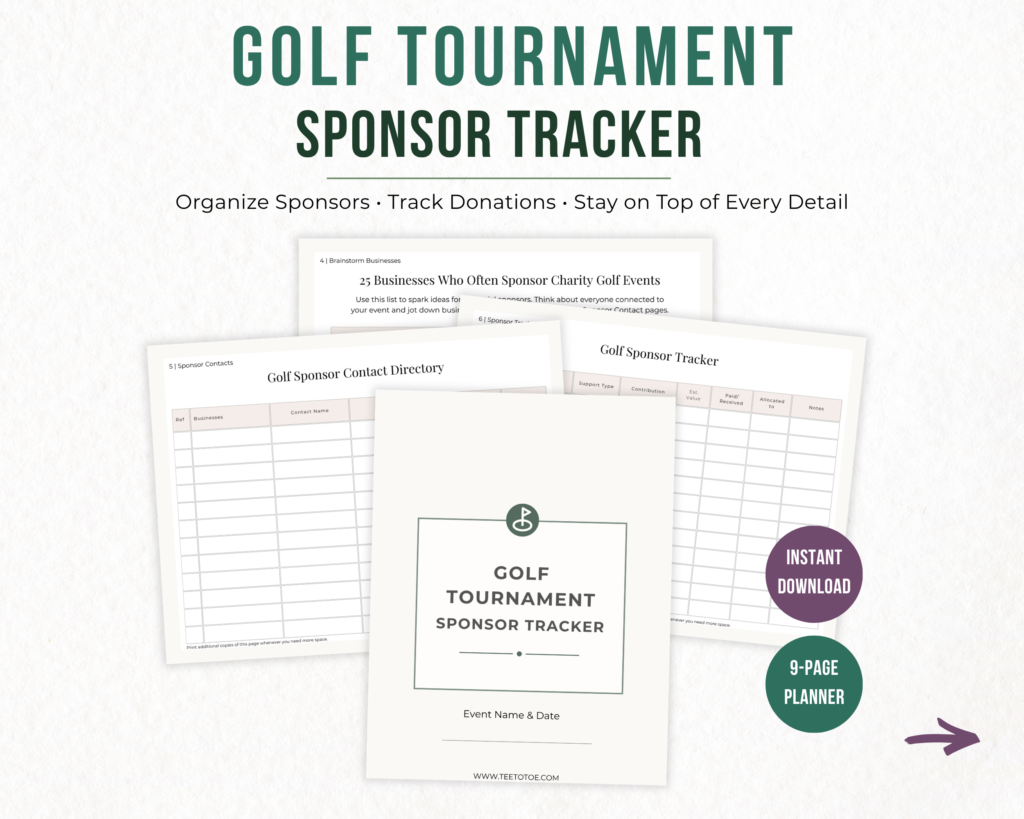
GET THE SPONSOR AND DONATIONS TRACKER →
.
.
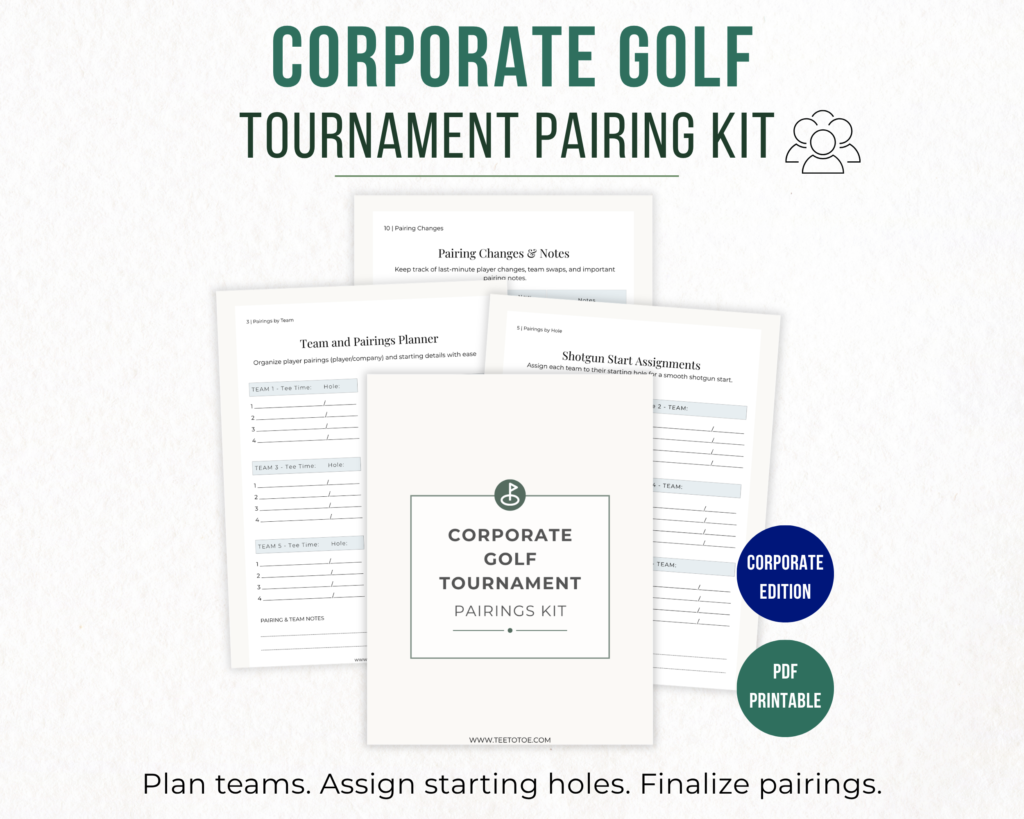
5. Leaving Pairings Until the Last Minute
Once the registrations start coming in, it can be tempting to think, I’ll sort the teams out later.
And then suddenly it’s tournament week.
Pairings can take more thought than you expect, particularly if you’re organising a corporate event where you want to mix employees and clients, or a charity tournament where players have specific team requests.
Leaving it until the last minute can also make it harder to deal with late registrations, cancellations and changes.
Decide how you’ll handle pairings
Before registrations close, decide what approach you’re going to take.
Will players choose their own teams? Will you create the teams? Or will you use a combination of player requests and organiser-selected pairings?
For a corporate golf day, you may also want to consider:
- Mixing clients and employees
- Creating networking opportunities
- Keeping teams reasonably balanced
- Avoiding putting people from the same company together
- Accommodating important client relationships
For a charity or social tournament, you may have different priorities, such as keeping friends together or making sure everyone has a comfortable group to play with.
Have a system for changes
Even the best pairings aren’t necessarily final.
Someone will cancel. Someone else will register late. A player may need to switch teams.
That’s why it’s useful to keep a master pairing list rather than relying on handwritten notes or several versions of a spreadsheet.
If you’re running a shotgun start, you’ll also need to know which team is starting at which hole and make sure that information is clearly communicated to players.
.
💡 Quick Tip: Aim to have your main pairings completed before tournament week, leaving yourself a little time to handle changes rather than creating the teams from scratch at the last minute.
A clear pairing system will make registration, check-in and the start of your tournament much easier to manage.
.
.
⛳ Make team and starting-hole assignments easier with pairings sheets
designed for both regular play and shotgun starts.
.
.
.
6. Leaving Prizes and Awards Until the End
Prizes are one of the fun parts of planning a golf tournament — but they’re also surprisingly easy to underestimate.
It’s not just about deciding who wins the tournament.
Depending on your format, you might have prizes for Longest Drive, Closest to the Pin, putting contests, team winners, individual winners or a few fun surprise awards.
And if you’re using donated prizes or sponsor contributions, you also need to allow time to organise, collect and keep track of them.
Decide on your awards early
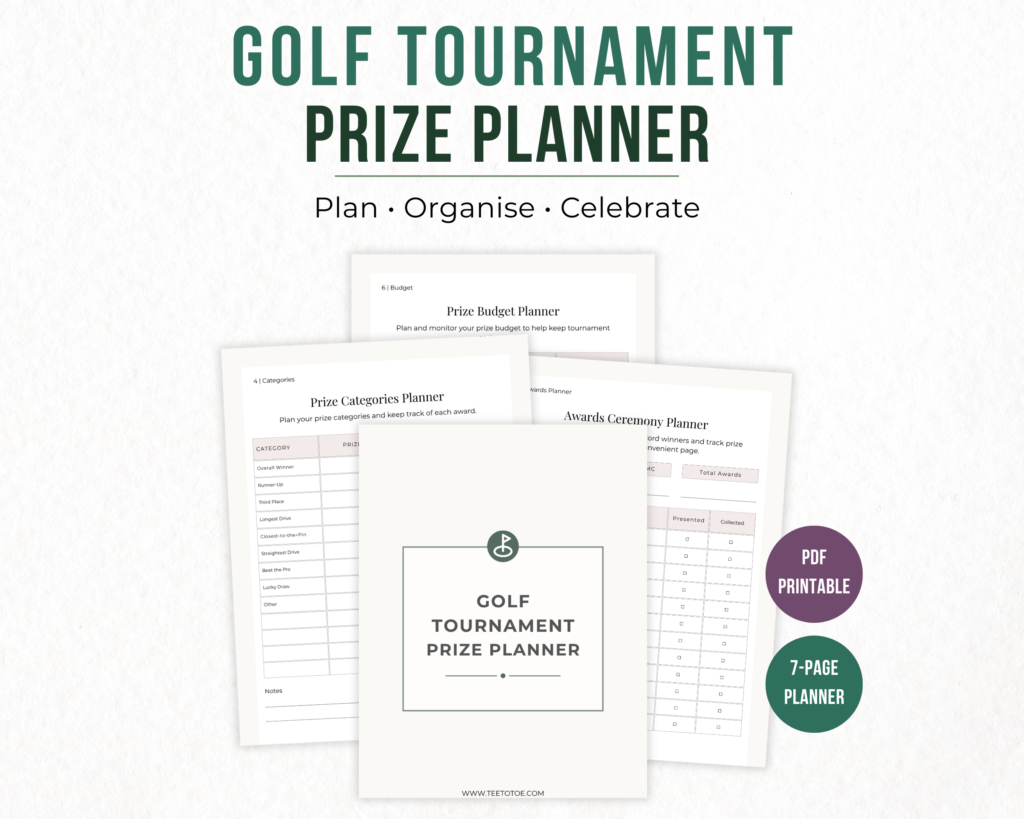
Before you start buying anything, make a list of all the prizes and awards you’ll need.
Think about:
- Overall winners
- Team prizes
- Individual prizes
- On-course contests
- Fun or novelty awards
- Raffle or auction prizes
- Sponsor-provided prizes
- Trophies, certificates or other recognition
Then decide which prizes you’ll purchase, request as donations or source through sponsors.
This can make a big difference to your budget.
Don’t forget the practical details
Someone needs to receive every prize on the day.
Make sure you know:
- What each prize is
- Who it’s for
- Whether it has been received
- Where it will be stored
- Who will present it
- Whether the winner needs a certificate or other documentation
If you’re running several contests around the course, prepare the relevant signs or instructions ahead of time too.
.
💡 Quick Tip: Create your complete prize and awards list early, even if some of the prizes haven’t been confirmed yet. You can update it as donations and sponsorships come in.
That way, you won’t find yourself standing in the clubhouse the night before the tournament wondering whether you’ve remembered everything.
A little prize planning now makes event-day presentations much smoother and much more fun.
.
.
⛳ Plan your tournament prizes and awards without losing track of what you need, who is providing it
and who will receive it.
.
GET THE PRIZE AND AWARDS PLANNER →
.
.
7. Focusing on the Tournament and Forgetting the Player Experience
It’s easy to get caught up in the logistics of running a golf tournament.
How many players? Which teams? What time is the shotgun start? Have all the sponsors been confirmed?
But your players aren’t thinking about your spreadsheet.
They’re thinking:
Where do I go? Where do I register? When do we start? Where’s my team? What’s happening next?
A great tournament isn’t just about getting everyone around the course. It’s about making the whole experience feel organised and enjoyable from the moment players arrive.
Think through the player journey
Put yourself in a player’s shoes and walk through the day from beginning to end.
Consider:
- Where will players park?
- Where do they check in?
- How will they find their team?
- Where do they collect their welcome materials?
- When and where will they receive instructions?
- Are the starting holes clearly marked?
- Where can they get food and drinks?
- How will they know about contests or games?
- Where should they go after the round?
- When and where will prizes be presented?
The easier these questions are to answer, the less players will need to ask your organising team.
Make information easy to find
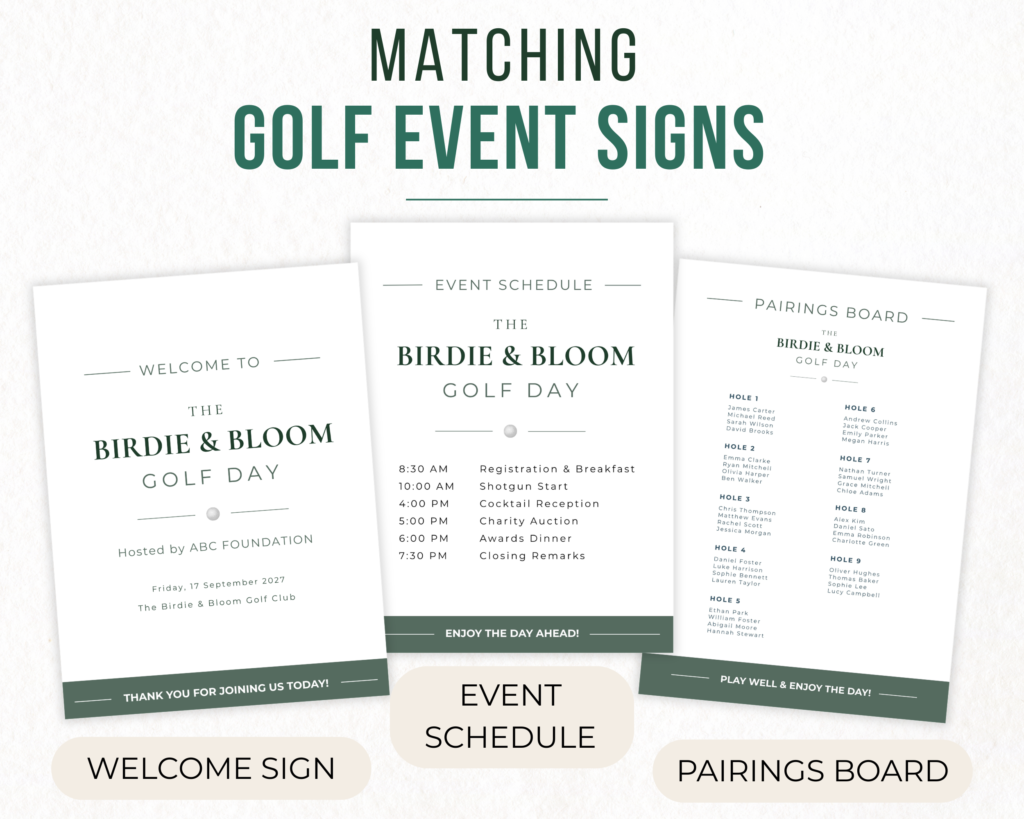
A few well-placed signs can make a huge difference.
Think welcome signs, registration signs, directional signs, cart signs, sponsor signs and contest signs — whatever makes sense for your event.
You can also include key information in a player email or welcome pack before the tournament.
The goal isn’t to overwhelm people with information. It’s to make the important information available before they need to ask for it.
.
💡 Quick Tip: Do a quick “player walkthrough” a few weeks before event day. Imagine you’ve never been to the venue before and ask yourself what you would need to know at each stage.
It’s a simple exercise, but it can reveal plenty of little details you’ve overlooked.
Because when players know where to go, what to do and what’s happening next, your organising team has fewer questions to answer — and more time to actually enjoy the event too.
.
.
⛳ Help players know where to go and what’s happening with
a coordinated welcome sign, event schedule and pairings board.
.
.
.
8. Not Communicating Clearly With Players
You might have every detail of your golf tournament organised in your head — but your players don’t.
And if important information is scattered across emails, social posts and last-minute messages, people can easily miss something.
Good communication doesn’t mean sending endless emails. It means making sure players receive the right information at the right time.
Create a simple communication timeline
Think about what players need to know before, during and after the tournament.
For example:
When they register:
Send confirmation and let them know what happens next.
A few weeks before:
Share important event details, including arrival time, dress code, format and anything they need to bring.
The week before:
Send the final schedule, parking information, registration details and any last-minute instructions.
On event day:
Make sure key information is available at check-in and around the venue.
After the tournament:
Share results, photos, thank-you messages and any fundraising updates.
Don’t assume everyone knows how it works
This is especially important if you’re running an event for people who don’t regularly play golf.
Explain things like:
- Where and when to check in
- What time to arrive
- The tournament format
- How teams and starting holes work
- Any special games or contests
- Dress expectations
- What is included in the entry fee
- What players need to bring
A short, clear email is usually much more useful than a long message packed with every possible detail.
.
💡 Quick Tip: Create a master list of all player communications and their send dates. That way, you aren’t trying to remember what needs to go out while you’re also managing the final event details.
Clear communication makes your tournament feel more professional — and gives your players confidence that they know exactly what to expect.
.
.
9. Not Doing a Final Run-Through
You’ve planned the tournament, organised the players, confirmed the sponsors and sorted the prizes.
But there’s one more step that can make a huge difference: walk through the entire event before tournament day.
It’s easy to assume everything will work because you’ve been working on it for weeks. But seeing the event as it will actually happen can reveal little gaps that aren’t obvious when you’re working from a checklist.
Do a final tournament walkthrough
A week or two before the event, walk through the day from the perspective of both the organiser and the player.
Check:
- Where will players arrive and park?
- Is registration easy to find?
- Are the welcome and directional signs ready?
- Are player lists and pairings up to date?
- Does everyone know their starting hole?
- Are scorecards and other materials prepared?
- Are prizes and awards accounted for?
- Are sponsor signs ready and assigned to the correct locations?
- Are contests and games clearly explained?
- Does the event schedule allow enough time for each activity?
- Does your team know who is responsible for each job?
If possible, do the walkthrough at the actual venue. You may notice things you wouldn’t have spotted on paper — a sign that isn’t visible from the car park, a registration table that needs more space or a route that isn’t as obvious as you thought.
Have a Plan B
You don’t need to prepare for every possible disaster, but think about the things that could realistically go wrong.
What happens if a player cancels at the last minute? What if a sponsor delivery is late? What if you have bad weather? Who handles a registration problem?
A simple backup plan can prevent a small issue from becoming a major headache.
.
💡 Quick Tip: Don’t just ask yourself, “Have we got everything?”
Ask:
“What could go wrong, and what will we do if it does?”
That final run-through gives you one last opportunity to fix the little things — and lets you arrive on tournament day feeling prepared rather than hoping everything falls into place.
.
.
Ready to Plan Your 2027 Golf Tournament?
Start early, stay organised, and give yourself plenty of time for the details.
A little planning now can save you a lot of stress later and leave you more time to enjoy the event. ⛳💚
.
.
You might also like:
- The Ultimate Corporate Golf Event Checklist for a Successful Golf Day
- 21 Fun Golf Tournament Games to Keep Players Entertained
- 35 Golf Raffle Prize Ideas Everyone Wants to Win
- How to Get Sponsors for a Charity Golf Tournament
- 21 Golf Tournament Fundraiser Ideas that Raise More Money for Charity Events