Planning a charity golf tournament is exciting, but before you book a course or start reaching out to sponsors, it’s important to have a realistic budget.
From green fees and catering to signage and player gifts, the costs can add up quickly if you don’t plan ahead.
.

The good news is that not every tournament needs a huge budget to be successful. With a little planning and the right fundraising strategy, you can create a memorable event while keeping expenses under control.
.
.
In This Guide, You’ll Learn:
- Typical costs to expect when planning a charity golf tournament
- Which expenses usually take up the biggest part of your budget
- Easy ways to reduce costs without sacrificing the player experience
- A sample tournament budget you can use as a starting point
- Budgeting tips to help avoid unexpected expenses
📌 Save this guide for later so you’ll have it handy when it’s time to plan your tournament budget.
.
.
Typical Charity Golf Tournament Costs at a Glance
One of the biggest misconceptions about planning a charity golf tournament is that every event costs the same.
In reality, your budget will depend on factors like the golf course, the number of players, whether meals are included, and how much support you receive from sponsors.
The table below gives you a general idea of the most common expenses you’ll want to plan for.
| Expense Category | Typical Cost* |
|---|---|
| Golf course & cart fees | $3,000–$10,000+ |
| Food & beverages | $1,000–$5,000+ |
| Player gifts & welcome bags | $15–$50 per player |
| Tournament signage & printing | $200–$1,000 |
| Registration materials | $100–$500 |
| Prizes & trophies | $500–$3,000 |
| Marketing & promotion | $100–$1,000 |
| Insurance & permits | $200–$1,000 |
| Payment processing & miscellaneous | Varies |
*These figures are general estimates and can vary depending on your location, venue, tournament size, and sponsorship support.
The good news? Many of these expenses can be partially – or even fully – covered by sponsors, helping you raise more money for your cause.
.
.
1. Golf Course Fees (Usually the Biggest Expense)
For most charity golf tournaments, the golf course package will be the largest item in the budget. It often includes more than just green fees, so it’s worth asking exactly what’s included before comparing venues.
A typical course package may include:
- Green fees
- Shared golf carts
- Driving range access
- Tournament scoring
- Cart signage placement
- Staff support on event day
Some courses also include banquet space, audio equipment, or registration tables as part of their package, while others charge separately.
Ways to Save Money
If you’re working with a limited budget, don’t be afraid to negotiate. Many golf courses offer discounted nonprofit rates or special pricing for weekday tournaments.
You can also reduce costs by:
- Booking a weekday instead of a weekend.
- Choosing an afternoon shotgun start.
- Asking if the course offers charity or nonprofit discounts.
- Bundling golf, meals, and banquet space into one package.
Quick Tip: Get quotes from at least three golf courses before making your final decision. The lowest price isn’t always the best value if another venue includes extras you’ll otherwise need to pay for separately.
.
.
2. Food and Beverage Costs
Food is another major expense, but it’s also one of the easiest areas to customize based on your budget.
Some tournaments keep things simple with coffee and pastries before tee-off, while others include lunch, dinner, awards banquets, or drink tickets.
Common food and beverage expenses include:
- Breakfast or coffee station
- Boxed lunches
- Buffet dinner
- Beverage carts
- Snack stations
- Bottled water throughout the course
Remember that players don’t necessarily expect a luxury dining experience. They do appreciate meals that are organized, served on time, and easy to enjoy between tournament activities.
Ways to Reduce Catering Costs
You may be able to lower expenses by:
- Finding a local restaurant willing to sponsor lunch.
- Offering boxed lunches instead of a full buffet.
- Including one drink ticket instead of an open bar.
- Asking beverage companies to donate bottled water or snacks.
Small savings in this category can make a noticeable difference to your overall budget.
.
.
3. Registration Materials
Registration is the first thing players experience when they arrive, making it well worth planning carefully. An organized check-in area helps everything run more smoothly and creates a positive first impression.
You’ll likely need:
- Registration signs
- Check-in sheets
- Name tags
- Player lists
- Welcome bags
- Scorecards
- Pens and markers
- Volunteer instructions
Most of these items aren’t individually expensive, but together they should be included in your budget from the beginning.
.
.
Keep Registration Day Organized
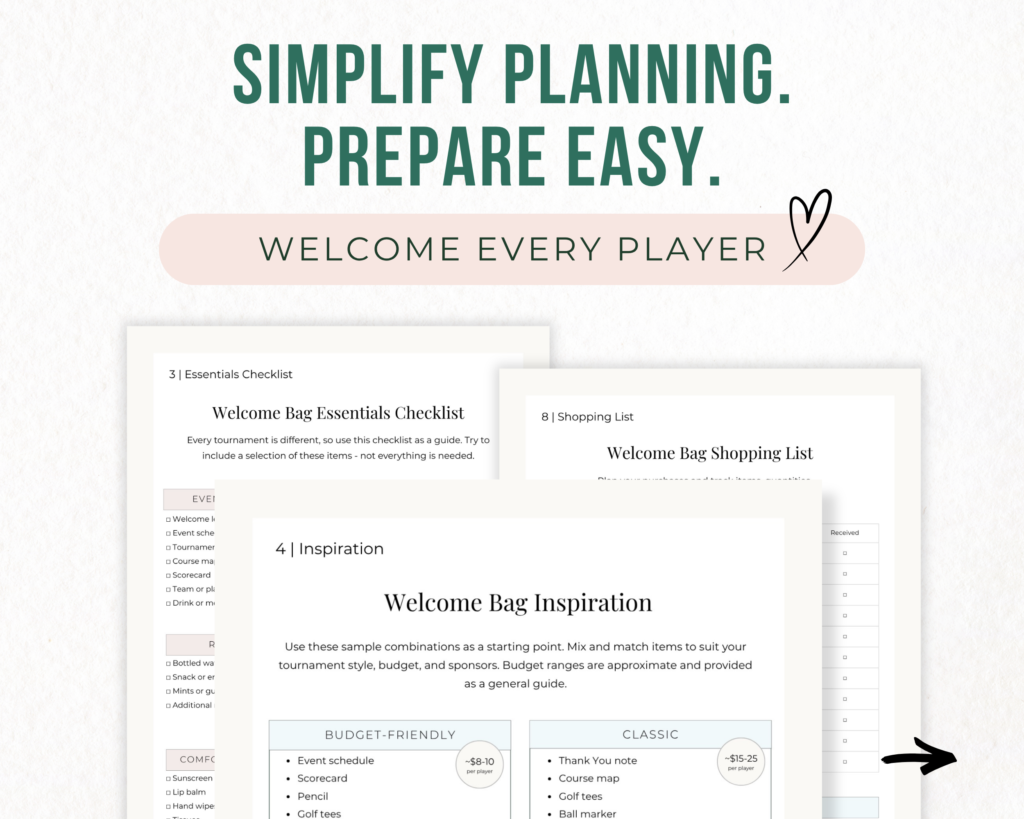
A smooth registration table starts with good planning behind the scenes. The Golf Tournament Welcome Bag Planner & Packing Kit helps organize welcome bag contents, track quantities, create packing checklists, and make sure every player packet is ready before tournament day. It’s an easy way to stay organized and avoid last-minute scrambling.
.
.
4. Tournament Signage
Professional signage does more than make your tournament look polished, it helps players find their way, highlights sponsors, and answers common questions throughout the day.
Consider budgeting for:
- Welcome signs
- Registration signs
- Sponsor recognition signs
- Hole sponsor signs
- Contest signs
- Directional signs
- Awards ceremony signage
If your event includes multiple contests or fundraising activities, consistent signage makes the entire experience feel more organized.
Ways to Save Money
Instead of ordering custom signs every year, consider using editable templates that can be updated for future tournaments. You’ll only need to change names, dates, and sponsors before printing again.
.
.
Create a Professional Look Without a Huge Budget
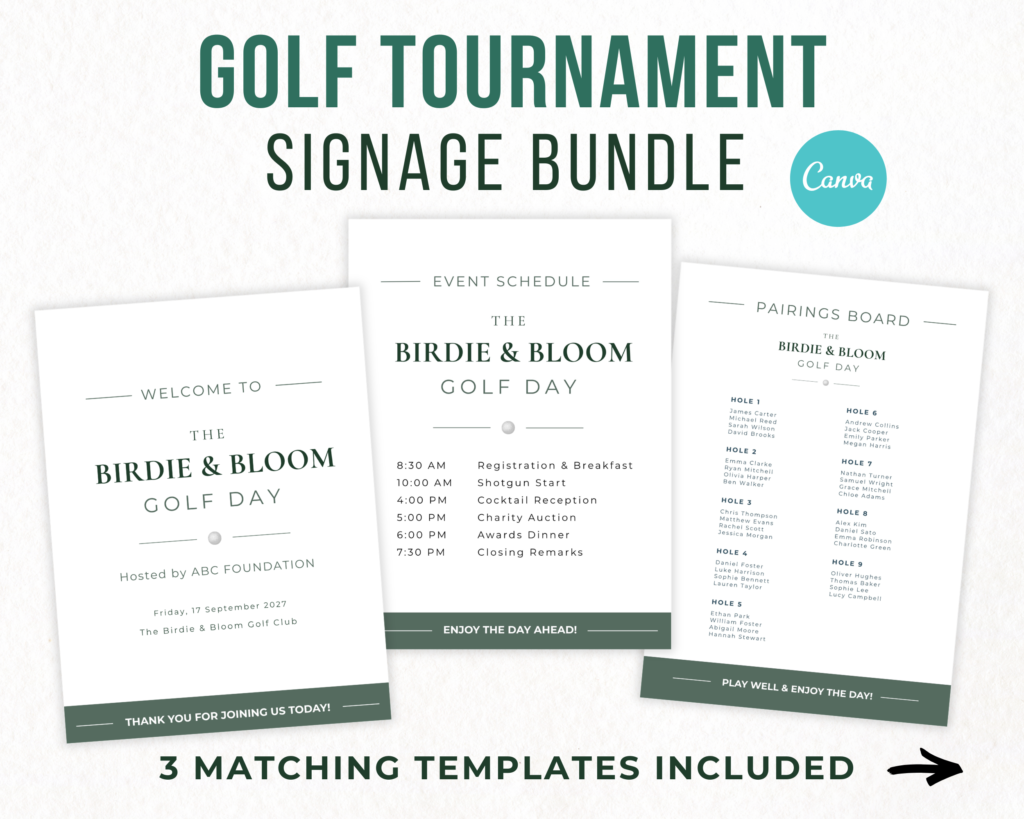
Coordinated editable Charity Golf Tournament Signs make it easy to customize registration signs, sponsor displays, contest signs, schedules, and directional signage while giving your event a polished, cohesive look.
They’re especially helpful if you’re organizing the tournament with volunteers and want everything to match.
.
.
5. Player Gifts and Welcome Bags
Welcome bags are a small detail that can leave a lasting impression. They help players feel appreciated from the moment they check in and give sponsors another opportunity to be seen throughout the day.
Popular welcome bag items include:
- Golf balls
- Wooden tees
- Ball markers from Birdie Girl Golf. Use TEETOTOE20 at checkout for a 20% discount.
- Golf towels
- Divot repair tools
- Bottled water
- Snacks
- Sunscreen
- Lip balm
- Sponsor coupons or promotional items
You don’t have to include expensive gifts to create a great experience. A thoughtfully packed welcome bag with a few useful items often means more to players than an oversized bag filled with things they’ll never use.
Ways to Keep Costs Down
Many businesses are happy to donate items in exchange for having their logo included in the welcome bag. Local golf shops, restaurants, banks, insurance agencies, and sporting goods stores are often excellent sponsors for these types of giveaways.
If your budget is limited, focus on quality over quantity and choose a few practical items that players will actually use during the tournament.
.
.
6. Contests and Prize Costs
Golf contests add excitement to your event while creating additional sponsorship opportunities. Whether you’re hosting a casual fundraiser or a large annual tournament, a few well-planned competitions can make the day more memorable.
Some of the most popular contests include:
- Longest Drive
- Closest to the Pin
- Longest Putt
- Straightest Drive
- Putting Challenge
- Hole-in-One Contest
You’ll also want to budget for team awards, raffle prizes, and any silent auction items you plan to include.
Save Money with Donated Prizes
Instead of purchasing every prize yourself, reach out to local businesses for donations. Gift cards, golf equipment, restaurant vouchers, hotel stays, and sports tickets are all popular raffle and contest prizes that businesses are often willing to contribute in exchange for sponsor recognition.
The less you spend on prizes, the more money your tournament can raise for your cause.
.
.
7. Marketing and Promotion
Even the best charity golf tournament won’t reach its fundraising goals if people don’t know about it. Fortunately, promoting your event doesn’t have to require a large advertising budget.
Depending on your audience, your marketing plan might include:
- Social media posts
- Email newsletters
- Flyers around the community
- Local business bulletin boards
- Community calendars
- Press releases
- Your charity’s website
- Sponsor promotion through their own channels
If you have a dedicated committee, encourage every member to help spread the word. Personal invitations and word of mouth are still some of the most effective ways to fill tournament spots.
Budget Tip
If you decide to run paid advertising, set a budget before you begin. Even a modest social media advertising budget can help reach local golfers when combined with consistent organic promotion.
.
.
8. Insurance, Permits, and Miscellaneous Expenses
Every tournament has a handful of smaller expenses that are easy to overlook. While they may not seem significant individually, they can quickly add up if they aren’t included in your budget.
Some common miscellaneous expenses include:
- Event insurance
- Credit card processing fees
- Decorations
- Volunteer refreshments
- Office supplies
- Extra golf cart rentals
- Sign holders and stakes
- Last-minute printing
- Batteries, tape, zip ties, and markers
It’s also a good idea to build a small contingency fund into your budget. Unexpected expenses are common, and having a little extra set aside can prevent unnecessary stress during the final weeks of planning.
Quick Tip: Adding an extra 5–10% to your overall budget for unexpected costs can help you stay on track if prices change or you need to make last-minute purchases.
.
.
Easy Ways to Reduce Your Tournament Costs
Keeping expenses under control doesn’t mean cutting corners. It means looking for opportunities where sponsors, volunteers, and careful planning can help stretch your budget further.
Here are a few simple ways to save money:
- Secure sponsors before committing to major expenses.
- Ask local restaurants or caterers to sponsor meals or refreshments.
- Request donated raffle prizes from local businesses.
- Recruit volunteers instead of hiring event staff where possible.
- Reuse signage, banners, and decorations from previous tournaments.
- Order supplies well in advance to avoid rush shipping costs.
- Keep track of every expense in one place so nothing gets overlooked.
Many successful charity golf tournaments aren’t the ones with the biggest budgets—they’re the ones with the best planning.
.
.
Sample Budget for a 72-Player Charity Golf Tournament
Every event will be different, but here’s an example of what a budget might look like for a mid-sized charity golf tournament with 72 players.
| Expense | Estimated Cost |
|---|---|
| Golf course package | $5,500 |
| Food & beverages | $2,000 |
| Welcome bags & player gifts | $1,000 |
| Tournament signage | $350 |
| Registration materials | $250 |
| Awards & prizes | $900 |
| Marketing & promotion | $300 |
| Insurance & miscellaneous | $700 |
| Estimated Total | $11,000 |
This example is meant as a planning guide rather than a fixed budget. Your actual costs may be higher or lower depending on your location, the golf course you choose, sponsorship contributions, and the size of your event.
.
.
Don’t Forget the Small Details
When people think about tournament expenses, they usually focus on the golf course and catering. In reality, it’s often the smaller purchases that catch organizers by surprise.
Things like extra pens, registration forms, tape, extension cords, sponsor signs, clipboard clips, tablecloths, and name tags may not seem expensive on their own, but together they can add several hundred dollars to your budget.
Creating a detailed checklist early in the planning process makes it much easier to track these smaller items before they become last-minute purchases.
.
.
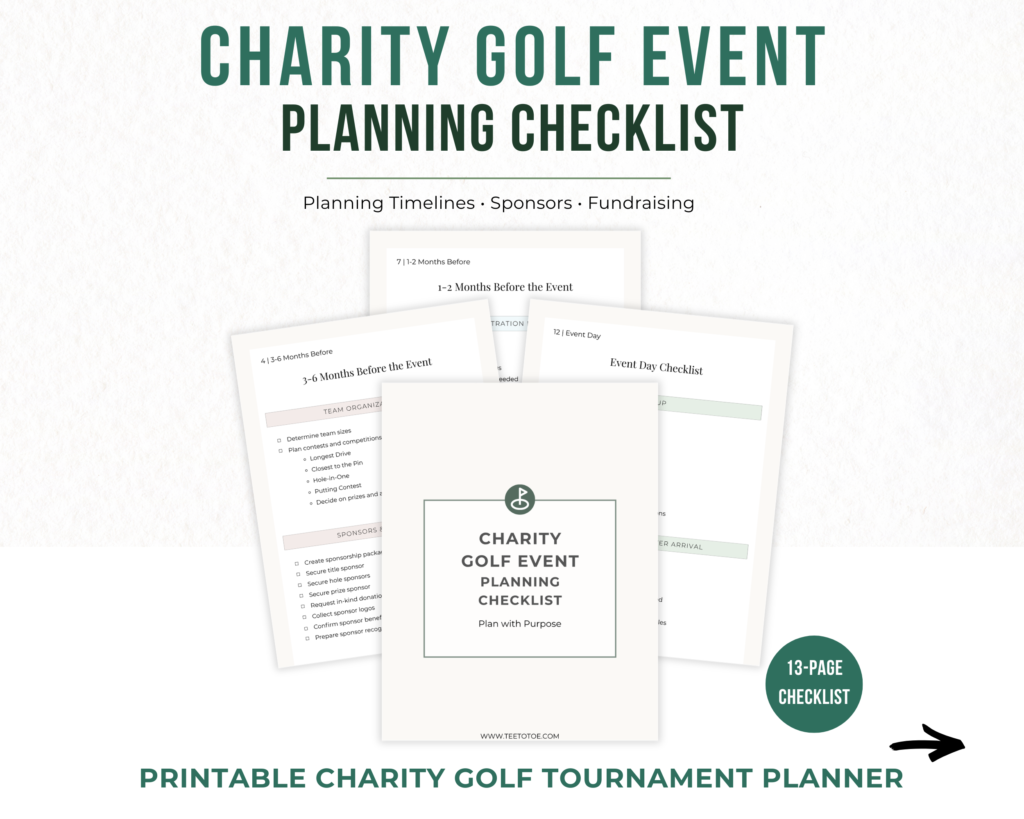
Stay ahead of every task with a Charity Golf Tournament Planning Checklist.
.
.
.
Quick Charity Golf Tournament Budget Checklist
Before finalizing your tournament budget, make sure you’ve accounted for these common expenses:
☐ Golf course and cart fees
☐ Food and beverage costs
☐ Player welcome bags and gifts
☐ Registration materials (name tags, scorecards, check-in supplies)
☐ Tournament signage and sponsor signs
☐ Contest prizes, trophies, and raffle items
☐ Marketing and promotional materials
☐ Event insurance and payment processing fees
☐ Volunteer supplies and refreshments
☐ Printing costs and office supplies
☐ Decorations and event-day extras
☐ A contingency fund (5–10% of your total budget)
Pro Tip: Review your budget one final time a week or two before the tournament. It’s much easier to catch missing items early than to make last-minute purchases on event day.
.
.